
Russ Fogle - Student Next Generation of Originality Award Winner
By: Russ Fogle
At this year’s ICFF, I was awarded the Student Next Generation of Originality Award by Be Original Americas. I’m immensely grateful to be recognized for my work, and, while I would love to leave it at that, I couldn’t help but think about what this award means for me and my practice.
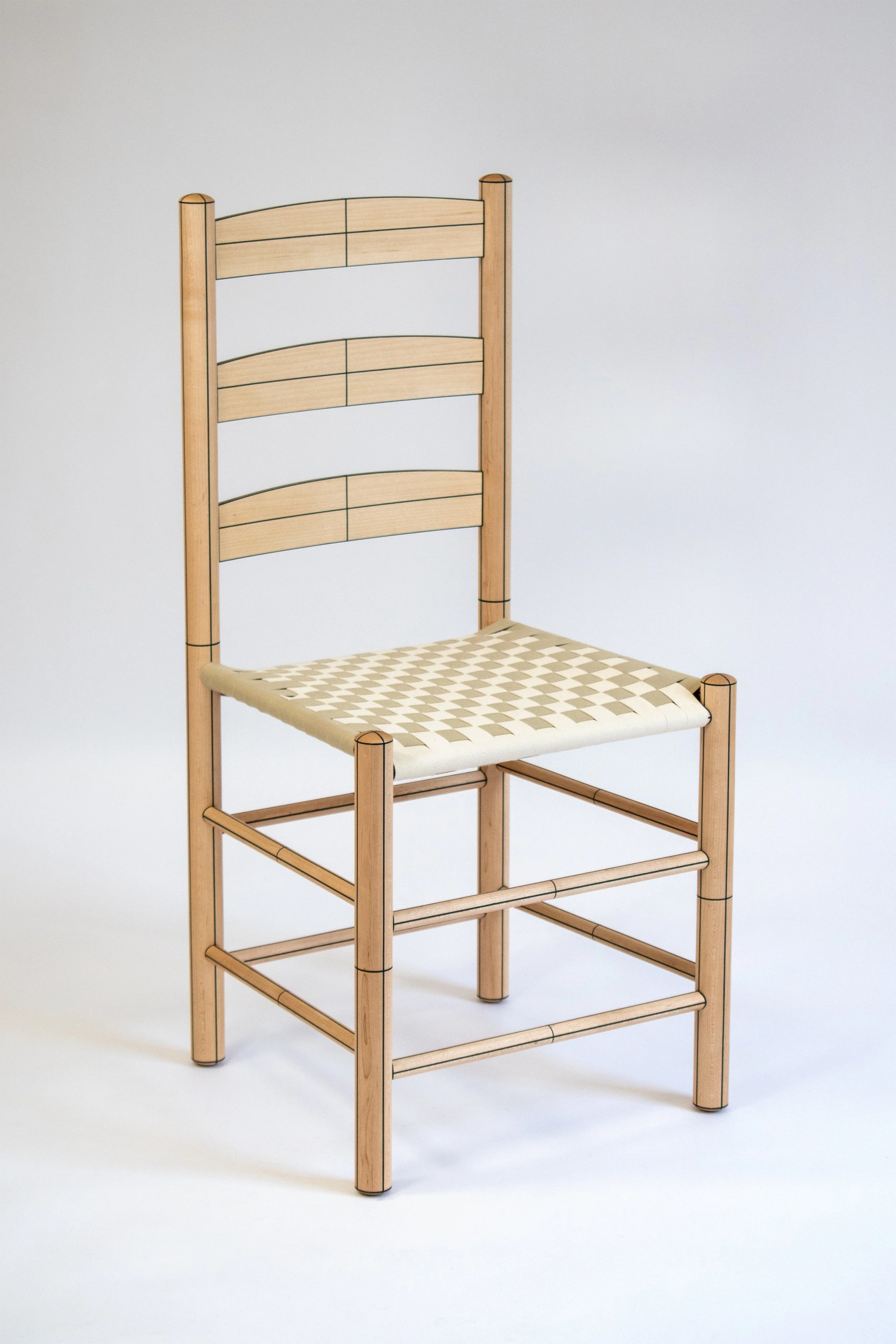
I’m surprised, really, to have been given an award so directly focused on originality when the piece that earned it is a formal reproduction of a traditional Shaker ladderback chair. Nothing new! Ladderbacks have existed since the Middle Ages, and they’ve gone through many iterations over the years to reflect the circumstances of their makers. The Shaker ladderback is the most famous: lathe-turned post-and-rung construction, a seat woven in cotton tape, and three or four back slats depending on the chair’s size. In my version, the only originality is in the chair’s ornamentation and the joinery necessary to support it. Built to imitate the wireframe model of a digital ladderback, each edge and centerline of the chair’s volume is executed in inlaid black-dyed maple veneer.
My background is in craft, where good work comes from a deep relationship with tools and materials. Coming into the design world, I wanted to build these same relationships with designers’ tools. Hopefully, I thought, if I can get close enough to these tools, something interesting will come out. The tool I ended up spending the most time with was the wireframe function in the modeling software Rhino.
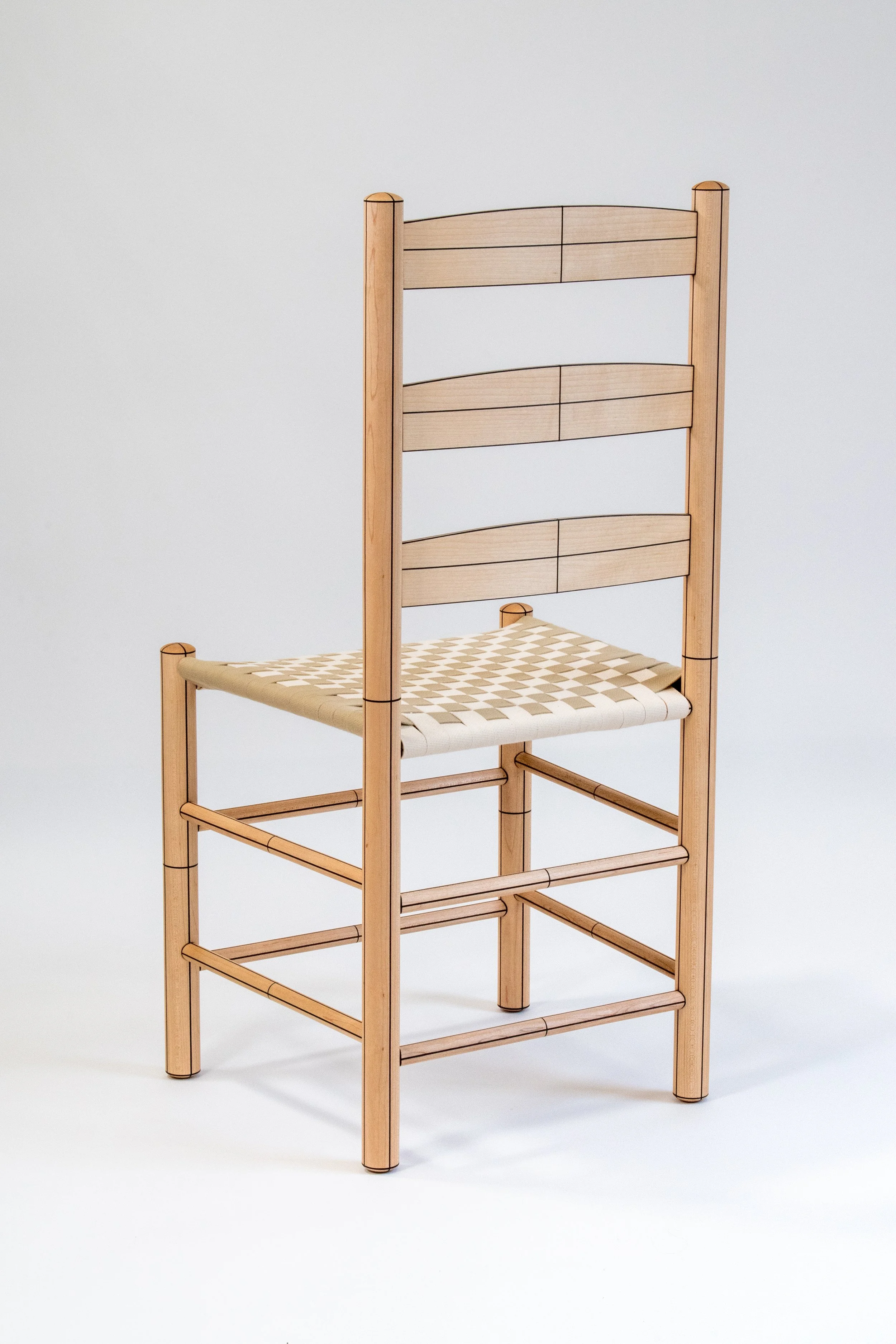
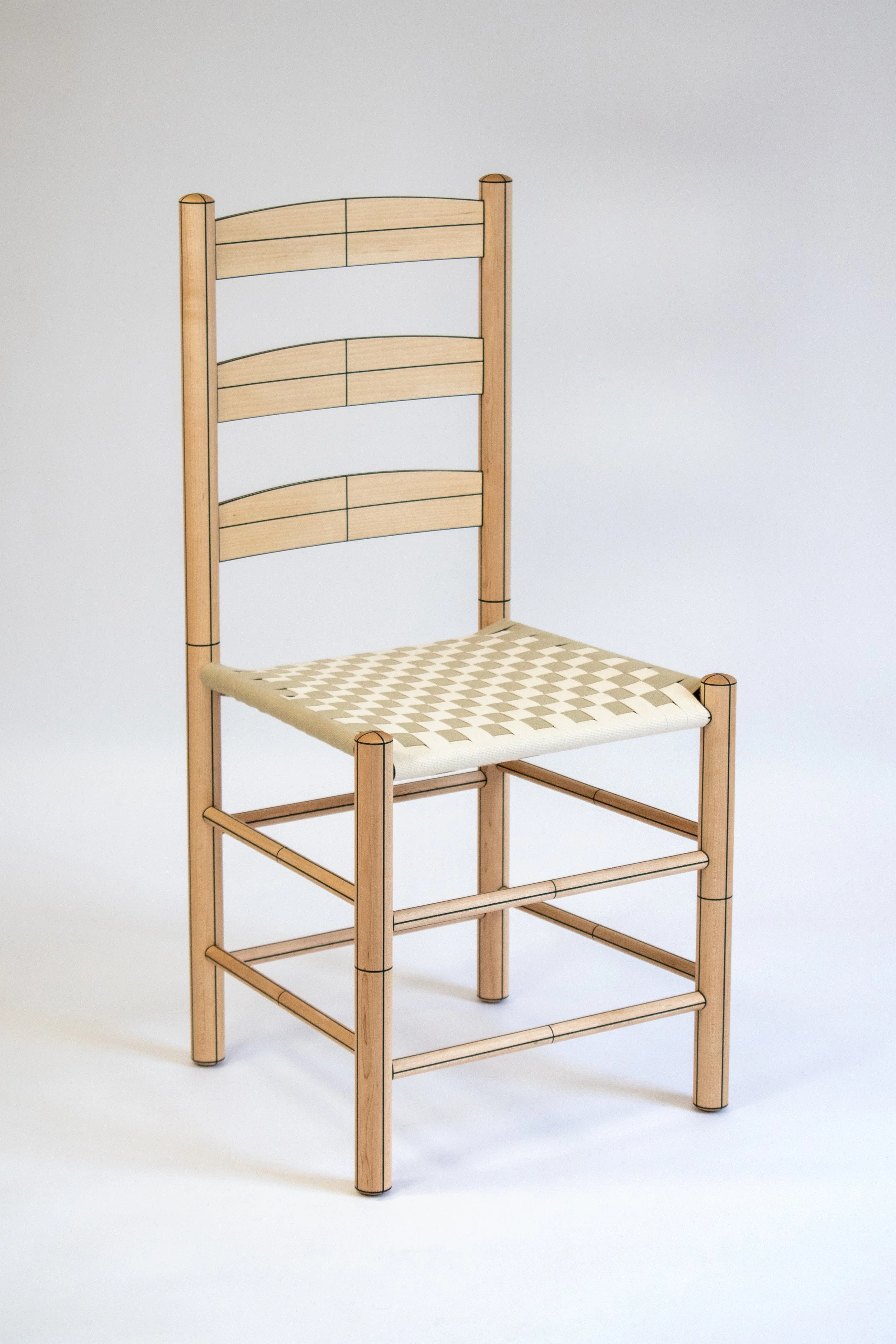
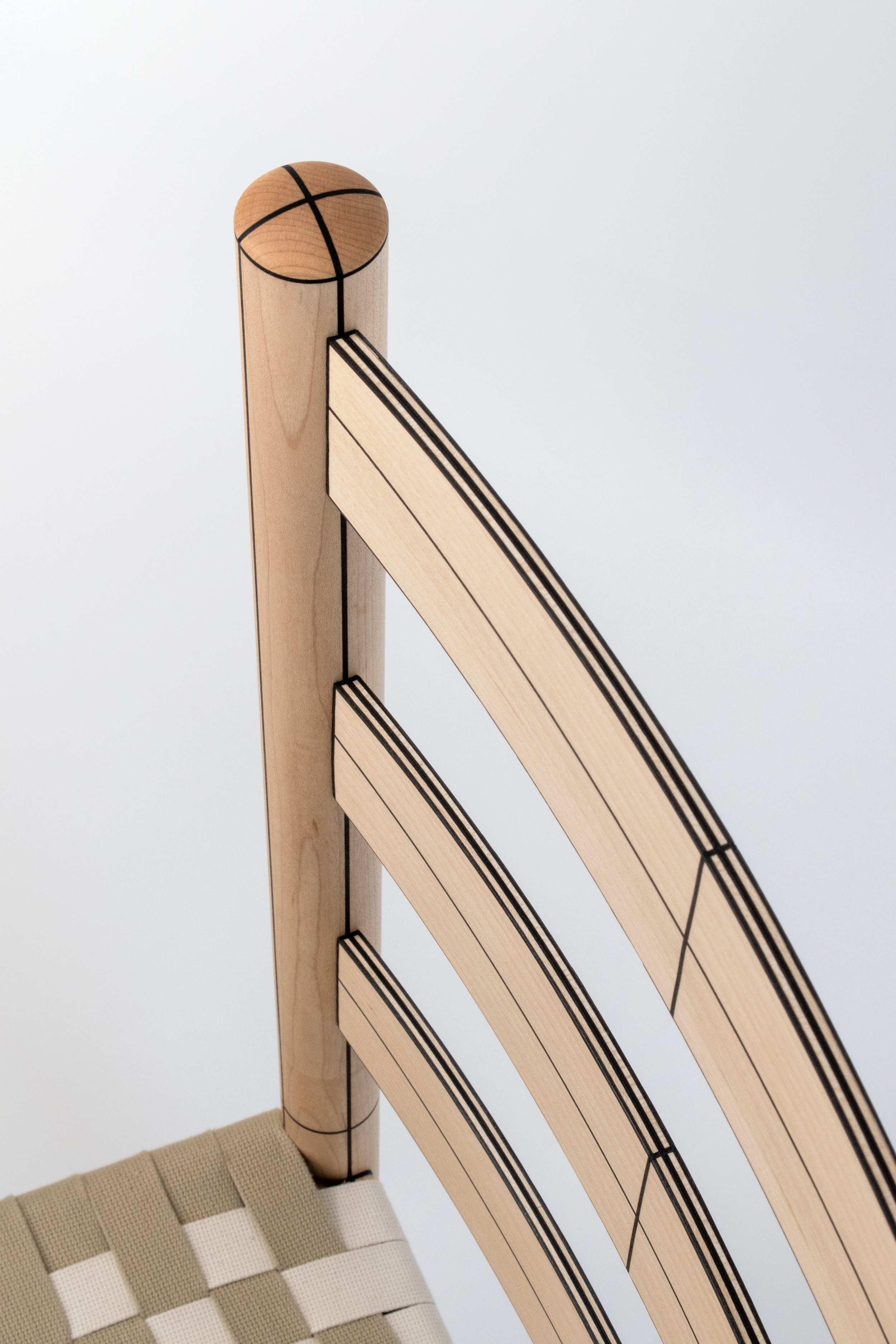
The wireframe is something that any designer working in the computer today would be familiar with, but few know its history. Dating back to the Italian Renaissance, wireframes were one of the first techniques invented to capture perspective, and were often used as a first layer in paintings to help calculate depth. In the 1960s, this technique was adapted for the screen as a means of representing volume with low computational overhead. Working so closely with wireframes in my studies made me wonder how it would feel if this technique were applied to a physical object. In building the chair, I found an object that blurs the line between digital and physical, craft and design, past and present.
It is deeply heartening to have this sort of work recognized. I believe that the future of design is one where the best objects are integrated from the entirety of the designer’s personal experience. That’s inherently original, even if it draws deeply on tradition. The more abstract our work becomes, the more we need to ensure a grounding in the reality of the materials and tools we use, whether analog or digital. I’m immensely grateful to Be Original Americas for supporting this sort of work, and for promoting originality, creativity, and authenticity in design.
Russ Fogle
@russ_fogle